A Practical Guide to Buying The Row Bags Safely
Finding one of these bags is straightforward. Buying one without risk calls for slightly more caution, and the reason is a structural one rather than a dramatic one. There is no exterior logo, no monogram and no printed hardware, which strips away the visual shortcuts buyers ordinarily rely on to spot a fake. Counterfeits reported through 2024 and 2025 have been good enough to hold up under photographic inspection, which pushes verification into two places: the channel you buy from and the checks you make in your hands. Read this as a channel-by-channel row bags overview rather than a league table, because the best route depends on whether a current model, an archive one, or the lowest price available is what you are after.
One point about money before the channels. Because The Row publishes no master price list, every figure below is an observed 2026 market price rather than an official quote, and both retail and resale move. Take the numbers as a sanity range, not as a target.
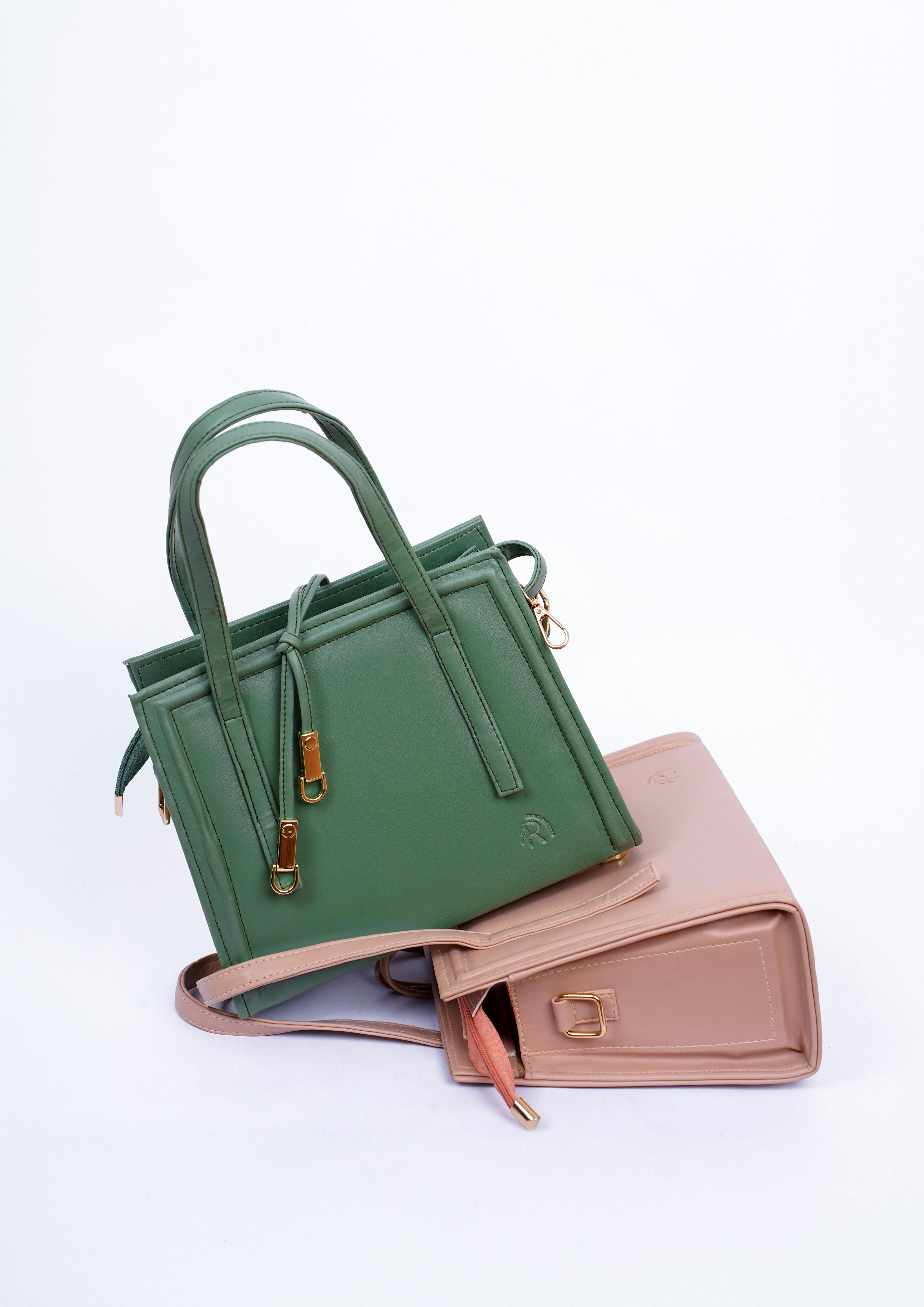
The official channel comes first
The sole official channel is the brand’s own website, a point worth stating plainly because it is the single most useful fact in this article. Everything beyond that, however established, is a third party shifting stock it has bought or consigned. Alongside the webstore, the brand operates its own boutiques in Los Angeles, New York, London, Paris and Amagansett, and those come with the same guarantee of provenance. At least one website not run by the brand trades under a similar name, so if you reach the official store through a search result rather than a saved bookmark, slow down for a moment. When the goal is a current-season piece with no authentication question hanging over it, nothing is more direct. The trade-off is that the row handbags fashion stock is limited, sizes sell through, and the brand does not discount.
Authorised multi-brand retailers
The bags are stocked by a short list of established retailers with the cooperation of the brand, and buying there offers essentially the same confidence as buying direct. These are department stores and luxury e-commerce operations with their own returns policies, customer service and, often, physical locations you can walk into. The advantage is breadth: one retailer has a colour the official store sold out of, another a size that never reached your market. Prices at authorised retailers usually mirror the brand’s own, and what variation exists comes from currency, duties and local taxes rather than from discounting. Seasonal sale periods are the exception, and they are where a genuinely new bag occasionally appears below its usual price. If a site you have never heard of is showing the current line-up at a discount, that is a reason to step back rather than to hurry.
- The department stores: Bergdorf Goodman, Neiman Marcus, Selfridges, Harvey Nichols, Lane Crawford.
- Luxury e-commerce sites: Net-a-Porter, Mytheresa, FARFETCH, FWRD, SSENSE, 24S, Moda Operandi, Cettire.
- Independents: A’maree’s and Savannahs, both long-standing stockists with small, curated buys.
- Off-price and archive retail: The Outnet, which offers past-season stock below original retail.
The resale market, and the protection each tier gives you
There is no single resale market, and treating it as one is how people come unstuck. One end of the range holds platforms that physically hold the bag, authenticate it in house and photograph the actual item you will receive. In the middle are consignment marketplaces: the platform authenticates, but the item may ship from the seller. At the other end sit open marketplaces where listings are created by anyone and the platform’s role is largely payments and dispute handling. The bags circulate across every one of these tiers, on Rebag, The RealReal, Fashionphile, Vestiaire Collective, 1stDibs, Madison Avenue Couture, Future Reference, Poshmark, eBay and Mercari. A search for The Row for sale returns listings from every tier at once, which is exactly why the tier matters more than the order of the results.
| Channel | What comes with it | The main risk |
|---|---|---|
| Brand’s own site and boutiques | The current line-up, provenance assured | Limited stock and no discounting |
| Multi-brand retailers with authorisation | Current-season stock and returns policies you know | What is in stock depends on the market |
| Off-price and archive channels | Older-season pieces priced under original retail | A narrow and unpredictable selection |
| Authenticating resale platforms | Archive models plus in-house authentication and condition grades | Signature models frequently sit above retail |
| Open, seller-listed marketplaces | Widest choice and the lowest asking prices | Highest counterfeit risk, and verification falls entirely to you |
Where the fakes concentrate
Sources covering the category routinely flag the open marketplaces, Poshmark and eBay in particular, as carrying higher counterfeit risk than the authenticated platforms. That reflects how those sites operate rather than a judgement about an individual seller: anyone can list, and no one inspects the bag before it ships. Should you buy there, treat the platform’s buyer protection as your authentication step, and be ready to use it. Ask the seller to photograph the interior stamp, the base, the corners and the hardware specifically for you, not to reuse images from an old listing. Always pay through the platform and never outside it, since an off-platform payment strips away every protection you have. The archive models are where this matters most, since Sofia, Devon, Camden and the original Bindle exist only on resale and cannot be cross-checked against a current official listing.
The authentication system that does not exist
No public serial number system, no date code and no authenticity card programme exists here. The absence is important in two directions at once. It means no number can be looked up to verify a bag, and equally that any seller offering a serial number, a certificate or an authenticity card as proof is describing something the brand does not issue. Take it as a strong signal to walk away rather than as comfort. What the bags do carry is a small, discreet exterior stamp low on the side and an interior stamp reading the logo and Made in Italy. Both should be crisp, correctly centred and evenly pressed, with misaligned letters, smudging or ragged edges counting as red flags.
What to check with the bag in your hands
Because photographs no longer settle the question, the checks that matter are tactile and structural. Real hide is substantial and soft at the same time and absorbs light rather than reflecting it back; fakes usually feel stiff, thin or faintly plasticky. Real suede is evenly coloured with no plastic sheen. Stitching should be machine-precise with even density, no fraying and no wandering lines, and hand-painted edges should show no overflow, bubbling or thin coverage. The hardware is palladium-plated in a matte or brushed finish, solid in the hand and smooth at the edges; on the Margaux the buckles and base feet are engraved. A genuine bag will also keep its shape when empty and recover its form after use, something cheap constructions rarely manage.
- Start with the interior stamp, checking it for centring, crispness and even pressure.
- Run a finger along the painted edges, feeling for ridges, bubbling or bare patches.
- Cycle every fastening several times, listening for precision rather than looseness.
- Place the bag empty on a flat surface and watch whether it keeps its own shape.
- Treat the dust bag, care card and box as corroboration only, never as proof on their own.
Let price be your first filter
Nothing screens faster than price, and it costs nothing to use. A major resale authenticator places new Margaux bags in the $5,000 to $9,000 range on the secondary market, so a listing in the hundreds is almost certainly counterfeit no matter how good the photographs look. Elsewhere in the line, observed 2026 market prices run from around $590 for a Double Travel Wallet and $900 for a Boone Tote up through $1,390 for a Half Moon and $4,350 for a Soft Margaux 12. Anything priced far below the band its model belongs to is either damaged, misdescribed or fake, and the listing rarely says which. Supply is part of the picture too. Reports in 2025 widely described the original Margaux being pulled from third-party retailers, a change the brand has never officially confirmed. Fewer new units in circulation puts more resale listings in front of the same buyers, which makes above-retail pricing on the signature silhouettes normal rather than a warning sign.
The short routine to follow before you pay
Most of buying well is sequencing, and the sequence is short enough to keep in your head. Decide first whether you need a current model or an archive one, because that single answer eliminates most of the channels immediately. Take current pieces from the brand or an authorised retailer; take archive pieces from a platform that authenticates in house and photographs the actual item. Go through the condition description line by line and ask for more images of whatever the listing describes but does not show. Confirm the return window first, pay second, and run the checks above on the day the bag arrives rather than two weeks afterwards. Doing that consistently is what makes buying The Row bags a low-risk exercise rather than a gamble.
